

Afternoon Tea at Burj Al Arab: Dubai’s Most Theatrical Tea Ritual
Burj Al Arab was built to become inseparable from Dubai’s image. Created by Tom Wright during his time with Atkins, the sail-shaped hotel rises from its own island off Jumeirah Beach, with a form intended to become as closely tied to Dubai as the Eiffel Tower is to Paris or the Opera House is to Sydney. Inside, Khuan Chew’s high-gloss interiors bring together marble and gold with vivid colours and a grand sense of height, giving the hotel the kind of theatrical first impression for which it became famous.
Dabbling in a spot of afternoon tea here involves far more than high-brow service and a well-dressed tea stand. At Burj Al Arab, the ritual is lifted by the sea-facing setting, gold-lit interiors and the hotel’s own sense of theatre before the first cup is even poured.
At Sahn Eddar, afternoon tea takes place beneath the soaring atrium, where the height and scale of the hotel give the ritual a palatial backdrop. At Skyview Lounge, the experience moves higher, with the Gulf and skyline giving the afternoon its more rarefied mood.
Sahn Eddar and the Theatre of the Atrium
Sahn Eddar, or “Reception of the House” as the name translates from Arabic, feels fitting for a venue placed at the foot of the hotel’s soaring atrium. This is an afternoon tea staged amid elegant jewel-toned interiors and a backdrop of open water, with live harp or piano music adding to the sense of ceremony.
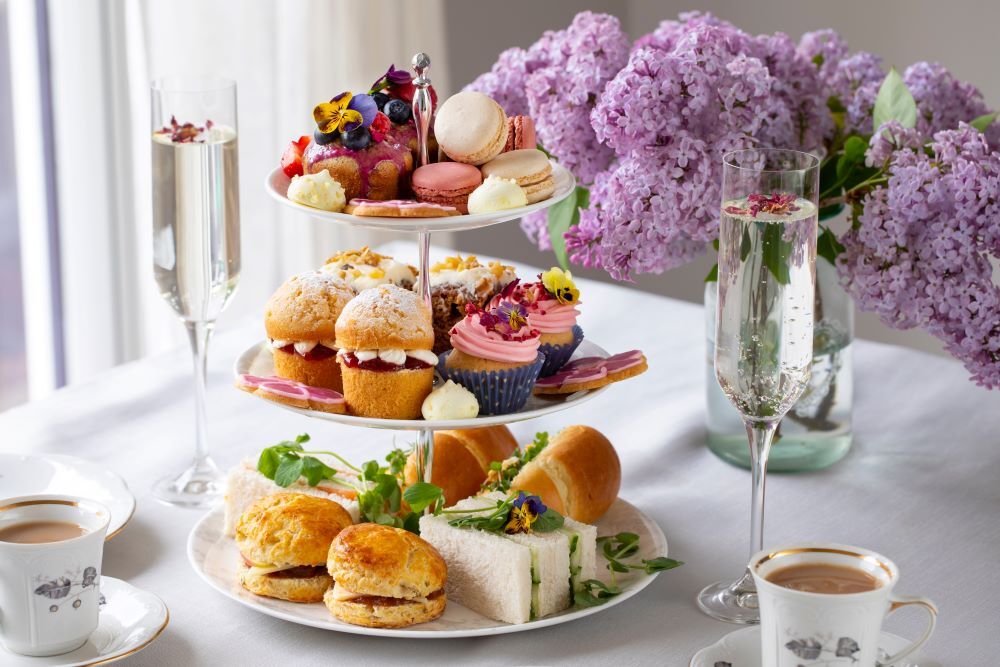
The service borrows from that same hotel-led polish. Rather than leaning only on the familiar finger sandwiches, scones and clotted cream, Sahn Eddar gives afternoon tea a more French-Mediterranean shape. The menu, created by Executive Chef Andrea Migliaccio and Executive Pastry Chef Tom Coll, moves through refined savoury offerings such as salmon gravlax with Baeri caviar, toasted king crab brioche, bluefin tuna tartlets and a chicken beignet with charcoal mayonnaise. The sweet selection follows with the precision of a patisserie counter, bringing delicate pastries, cannelés and fruit-led creations into the ritual.
Tea remains central to the experience. A tea sommelier guides guests through a wide list of white, black and green teas, while the setting gives the service its grander rhythm. For those who want the most recognisable Burj Al Arab flourish, Sahn Eddar’s 24K Gold Cappuccino adds a final note of theatre. This is a polished hotel ceremony, where the scale of the room and the detail of the plate both shape the enchanting tea time experience.
Skyview Lounge and the Ritual Above the Gulf
Skyview Lounge gives afternoon tea a calmer, more view-led setting. Set high on the 27th floor of Burj Al Arab, it places the ritual against wide views of Dubai’s coastline, Palm Jumeirah and the Arabian Gulf. The room feels polished and grown-up, with the height of the hotel giving the afternoon a clear sense of occasion.
The service follows the familiar rhythm of a proper afternoon tea, with caviar, savoury bites, house-baked scones with clotted cream and carefully finished pastries. The Burj-shaped tea stand gives the table a detail that belongs unmistakably to the address, while the glass-wrapped setting keeps the mood composed. Skyview suits guests who want the hotel from above, with tea poured slowly, the city below and the water beyond.
Two Versions of the Same Address
The choice between Sahn Eddar and Skyview Lounge comes down to the kind of afternoon guests are after. Sahn Eddar gives the stronger sense of arrival, placing guests in the hotel’s soaring central atrium, with music, movement and the full scale of Burj Al Arab around the table. It is the better introduction to the hotel, especially for a first visit or a family occasion.
Skyview Lounge feels quieter and more grown-up. Set high above the city, it relies on light, coastline views and the slow pleasure of tea taken away from the usual pace of Dubai. The mood is more private, more measured and more dependent on the view changing beyond the glass.
Together, the two settings show why afternoon tea at Burj Al Arab has never been only about sandwiches, scones and pastries. Much of its charm lies in the access, the architecture and the simple pleasure of spending an afternoon somewhere genuinely memorable.
A Ritual Scaled to the Address
Afternoon tea began as a small answer to a long afternoon. In early Victorian England, it is commonly linked to Anna Russell, Duchess of Bedford, who wanted something light between luncheon and a late dinner. Tea, bread, butter and cake slowly became a social habit, then a hotel ritual, and eventually one of Britain’s most recognisable afternoon pleasures.
At Burj Al Arab, that modest beginning is carried into a setting of very different scale. The old ritual remains recognisable in its savouries, sweet pieces, tea and carefully paced service, yet the surroundings change the mood entirely. Beneath the cups and polished cutlery is a building finished with rare materials, including Statuario marble, the same Italian stone associated with Michelangelo’s David. It is a detail most guests may never consciously notice, but it gives the setting a quiet historical weight beneath all the gold and colour.
The service culture adds another layer. This is the kind of hotel where personalisation extends far beyond the dining table, from butler service to a pillow menu with 17 choices. Seen in that context, afternoon tea becomes part of a wider habit of precision: the tea list, the stand, the pacing, the view and the way each small course arrives. Even the hotel’s quieter side, through its connection to turtle rehabilitation work, adds a softer note to a property better known for marble, height and Champagne. The pleasure is not only in taking tea, but in seeing an old British ritual handled with the full care, craft and scale of Burj Al Arab.