

Shaun Killa: A Measured Hand Behind Modern Landmarks
Shaun Killa’s work is closely tied to the modern architectural story of Dubai, but to confine his practice to the city would not do it justice. His buildings draw on the Gulf’s appetite for ambitious form, while also reflecting a wider concern for structure, climate, engineering and use.
That balance is important. In cities where towers, hotels and cultural buildings shape the daily view, a strong outline can only do so much. The building still has to deal with heat, glare, traffic and the steady movement of people. It has to hold its place on the skyline, but also feel clear and usable at the entrance, in the lobby and through the spaces within.
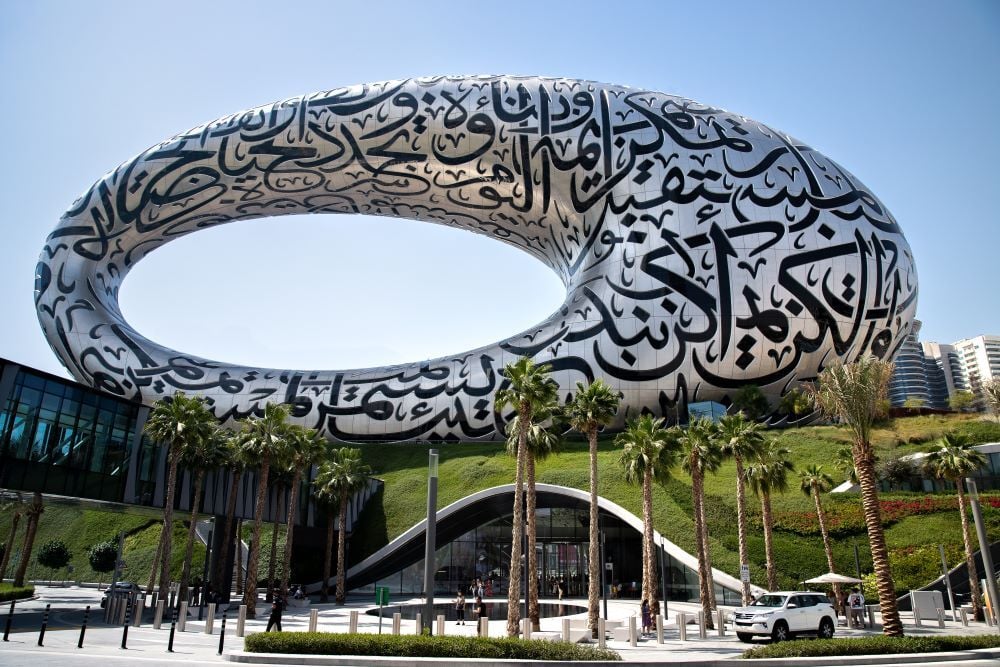
image source: Caroline Ericson / Shutterstock.com
From South Africa to Dubai
Born and educated in South Africa, Killa moved to Dubai in 1998, joining Atkins as the city was beginning to build on a far larger scale. It was a period when Dubai was not only adding new towers and hotels, but also working out how architecture could help give the city a more recognisable public identity.
During his years at Atkins, Killa worked on, or was closely associated with, several major projects in the region, including Burj Al Arab, Almas Tower, Dubai Opera and Bahrain World Trade Centre. The experience brought him into contact with large structures, complex briefs and the particular demands of building in a fast-growing city. It also seems to have shaped one of the questions that runs through much of his later work: how can a building be memorable without becoming only a visual gesture?
Bahrain World Trade Centre and an Early Environmental Argument
The Bahrain World Trade Centre, completed in 2008, is a useful point of reference in Killa’s career. The twin towers are best known for the three wind turbines set between them — a bold decision at the time, and one that made the building’s environmental thinking visible from the street.
That was no small thing. Rather than placing sustainability out of sight, the project made it part of the architecture itself. For an architect later associated with some of the region’s most recognisable buildings, the point still matters. A strong silhouette may catch the eye, but the better work is anchored in engineering, climate and purpose.
Founding Killa Design
In 2015, Killa founded Killa Design in Dubai. The practice made an unusually strong start, taking on early commissions for the Museum of the Future and Address Beach Resort, two projects very different in purpose but both highly visible in the city. One would become a cultural landmark linked to Dubai’s interest in science and future thinking. The other brought hotel, residential and leisure uses together on one of the city’s busiest beachfronts.
Since then, the studio has grown into a substantial Dubai-based practice, working across cultural, hospitality, residential, office and mixed-use projects. Its work reflects the pace of the city around it, with demanding briefs, advanced construction methods and, quite often, little room for ordinary solutions.
Museum of the Future
The Museum of the Future is, by some distance, Shaun Killa’s best-known work. Opened in 2022 beside Sheikh Zayed Road, near Emirates Towers, it has become part of Dubai’s daily view, seen from office windows, taxis and the traffic moving along the city’s main artery. Its torus-shaped form brings together a green mound, a stainless-steel shell and the central void, with Arabic calligraphy across the façade based on words by Sheikh Mohammed bin Rashid Al Maktoum. The script is not simply surface detail. It forms the building’s windows, drawing daylight through the skin.
Much of the project’s interest sits in the making of it. The museum was developed using advanced digital design and building information modelling, with a complex steel structure and individually shaped façade panels. At 78 metres high, with seven storeys above a three-storey podium, it had to be more than a striking object beside the road. The work involved in turning that form into a functioning public building is part of what gives it weight.
The symbolism is clear without needing to be over-explained. The solid form is often read as present knowledge, while the void points to what remains unknown. Yet the building’s strength is not only in the idea. It works because the idea is carried through the structure, the skin, the openings and the way people encounter it from the city around it.
Office of the Future
If the Museum of the Future is Killa’s most recognisable work, the Office of the Future is the quieter but telling counterpart. Completed in 2016 for the Dubai Future Foundation, the 325-square-metre pavilion became known as the world’s first fully functional, permanently occupied 3D-printed office building. Its concrete structure was produced through additive manufacturing, with the main printing completed in 17 days and installation on site taking two days.
The project is interesting because it does not try to impress through size. It is a modest building, and all the better for it. Its importance lies in showing that a new method of construction could be used for a real workplace, not simply a demonstration piece. Thick insulating cladding, shaded openings and a courtyard plan help it respond to Dubai’s heat, giving the building a practical calm. Here, technology is not the whole story. It serves the everyday business of working, arriving, sitting and staying comfortable inside.
Hotels, Coastlines and the Public View
Killa’s hospitality work brings his architecture into a more public, coastal setting. Address Beach Resort, completed in 2021 at Jumeirah Beach Residence, gave one of Dubai’s busiest waterfronts a building with real presence. The twin 77-storey towers rise to 301 metres and are joined by a skybridge, bringing hotel rooms, residences and serviced apartments into one development. The central opening helps reduce the weight of the towers, allowing the building to feel less solid when seen from the beach or the road.
Jumeirah Marsa Al Arab, opened in 2025, has a softer coastal character. Designed by Killa Design between Burj Al Arab and Jumeirah Beach Hotel, it takes cues from the line of a superyacht, with curved balconies, horizontal bands and a large arch framing views towards Burj Al Arab. This was no small brief. The project had to sit beside one of Dubai’s most recognisable hotels without imitating it or trying too hard to compete. It holds its own by having a clear identity while still feeling connected to the wider Jumeirah beachfront.
Shebara and the Red Sea
Beyond Dubai, Shebara on Saudi Arabia’s Red Sea coast marks another step in Killa’s resort work. Developed by Red Sea Global, the resort opened to guests in 2024 and includes 73 villas, many of them reflective stainless-steel overwater units. Their rounded forms are often linked to pearls, a reference that sits naturally with the water setting and the Gulf’s long pearling history.
The villas are striking, of course, but the more interesting point is how carefully they were made and placed. The units were fabricated off site and transported into position, reducing construction activity on the island itself. The resort also forms part of a wider Red Sea development shaped by renewable energy, water management, and careful planning for the marine environment.
Beyond the Landmarks
Killa’s work continues to move between public buildings, coastal resorts and private residential schemes. In Abu Dhabi, Killa Design is also behind Four Seasons Private Residences on Saadiyat Beach, an ongoing collection of private villas set between the Gulf and the island’s golf course. At this more private scale, the questions shift from public recognition to shade, privacy, outlook and the way a home sits within its surroundings.
Seen in that light, Killa’s career is not only a story of highly recognisable buildings. From Dubai to the Red Sea and Saadiyat Island, his practice has followed the Gulf’s changing architectural ambitions with a steady eye for context, proportion and lasting purpose. The best of his work sits in that clear-eyed middle ground, where a building can hold attention from afar and still work well at the scale of everyday life.