Published: 07 January 2026
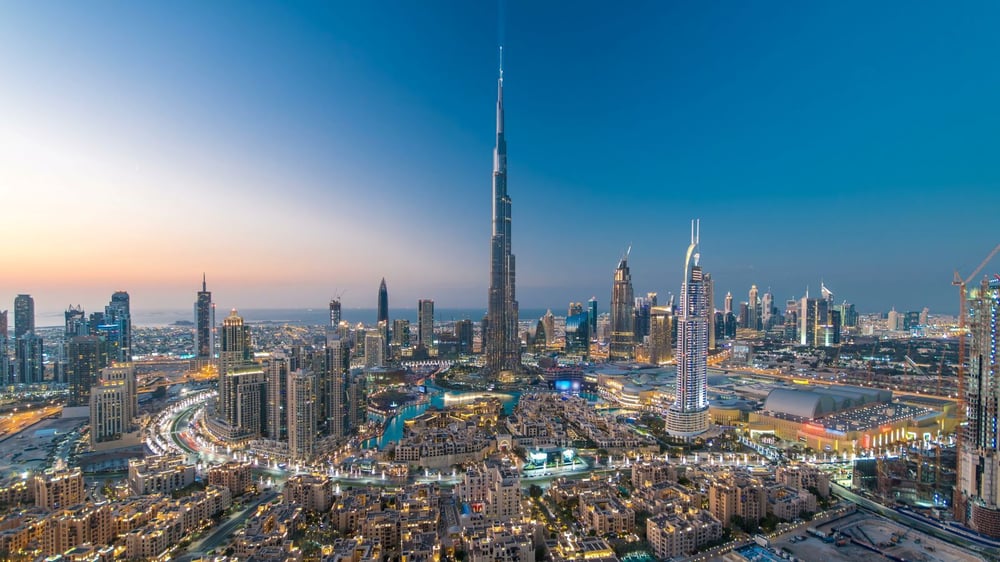
Mention the word ‘Dubai’ to any person in any country around the world, and they will inevitably picture a skyscraper-laden vista, the crown jewel being the iconic Burj Khalifa. This Emirati powerhouse is known for its outstanding buildings, breathtaking man-made islands and expansive labyrinth of highways connecting all corners of the city. Home to some of the most impressive projects known to man, this economic heavyweight has a range of further mega projects in the works, all designed to continue Dubai’s impressive growth. Read on to discover the biggest mega projects currently in the works for Dubai.
Palm Jebel Ali
When plans were first put forward to create an artificial, palm-shaped island jutting out from Dubai’s coastline, many people scoffed at the idea. Those plans were describing the now iconic Palm Jumeirah, easily one of the world’s most coveted neighbourhoods.
Palm Jumeirah, the first of three planned palm-shaped islands, was followed by Palm Jebel Ali as the second, while the third, Palm Deira, has evolved into the exclusive Dubai Islands development. The Palm Jebel Ali project is based on Palm Jumeirah in shape, but will be more than twice the size of its sister, housing the best of the best where restaurants, hotels and wellness facilities are concerned. Set across seven connected islands, the project will also boast lush, green habitats, 35,000 prime and super-prime homes and upscale entertainment facilities across 80 five-star hotels and resorts, making Palm Jebel Ali one of the most highly anticipated residential developments since Palm Jumeirah.
With a planned 90 kilometres of coastline, the development is set to dramatically increase the city’s beachfront residential offerings, standing as the most ambitious project to date. So vast, in fact, that it can easily be seen from space.
The project was initially launched in 2002, but following the global financial crisis of 2008, it was quietly put on hold. In 2023, Sheikh Mohammed bin Rashid Al Maktoum announced that the Palm Jebel Ali project was once again up and running, with a new, sustainability-focused approach. The relaunch was part of a broader strategy to address the rising demand for waterfront properties in the city, as well as to build on the unparalleled success of Palm Jumeirah. When completed – the first phase of which some ambitious commentators claim could be as soon as 2027 – the project will become one of the world’s largest man-made islands.
Al Maktoum International Airport
Residents and visitors to Dubai will be used to the charm of Dubai International Airport, which has provided a solid backbone for the rise of the city. However, with the implementation of the Dubai 2040 Urban Master Plan, DXB – as it is affectionately known – will ultimately be set to pasture.
Operations will eventually transfer to Al Maktoum Airport, located in the southwest of the city. Currently, the airport handles cargo flights only, but the plan is to eventually develop the site to manage more than 250 million passengers per year. This mammoth undertaking will include five parallel runways, 400 aircraft gates across five terminals, multiple upscale hotels, and an underground train network connecting the project to the wider city.
This particular mega project is not your run-of-the-mill airport expansion. It will eventually become a fully-integrated, multi-modal, future-ready urban development, bringing together the worlds of aviation, ground transport, retail, real estate and entertainment.
The World Islands
Initially, this mega project was seen as one of the most ambitious ever envisioned in the city. In 2002, it was proposed that around 300 man-made islands would be built a short distance off the coast of Jumeirah Beach, but that plan has hit various speed bumps ever since.
The group of islands is designed to resemble the world map, covering areas ranging from about 23,000 to 83,000 square metres. Built using 321 million cubic meters of sand and almost 35 million tons of rock, the project was first launched in 2003, but similar to Palm Jebel Ali, it slowed considerably following the global financial crisis of 2008. This left many of the islands underdeveloped and, as such, uninhabited. But slowly, the project is once again coming to life thanks to initiatives like the ‘Heart of Europe’ – a grouping of six themed islands, such as Monaco and Sweden, which already boasts some available villas.
Some of the private islands have been sold off to investors, businesses and celebrities, but most remain the property of master developer Nakheel. Interestingly, the ruler of Dubai, Sheikh Mohammed bin Rashid Al Maktoum, owns the island of Greenland, which serves as a whimsical contrast between the city’s sun-drenched climate and the icy imagery of its namesake.
The Island
Located between Jumeirah Bay Island and the iconic Burj Al Arab, The Island is part of Dubai’s vision to continue attracting the world’s biggest hospitality brands to the city. The announcement follows Ras Al Khaimah’s scoop of being awarded the Wynn hotel and casino development, with Dubai set to welcome three of Las Vegas’ biggest resort hotels, as Aria, MGM and Bellagio all make their debuts in the Middle East.
The Island will, it is hoped, become a major focal point for attracting international holidaymakers, as city planners look to take inspiration from America’s playground. As of yet, it is unknown if the three hotels will be presented with gaming licenses, but that will become clearer as completion approaches.
In terms of engineering, The Island is yet another Dubai mega project of immense proportions. Set for completion in Q3 2027 and opening in the second half of 2028, the development is set across 3.5 million square metres and will feature more than 1,400 hotel rooms, a 110-metre tower, an 800-seat theatre, indoor and outdoor swimming pools and a range of retail, entertainment and dining options.
Therme Dubai
Located in Za’abeel Park, Therme Dubai will become the tallest wellness facility in the world upon completion, at 100 metres. The futuristic structure will incorporate both indoor and outdoor wellness zones, with a focus on verdant spaces designed to enhance peace and tranquillity.
Announcing the project on social media platform X, Sheikh Hamdan bin Mohammed Al Maktoum described Therme Dubai as “an iconic addition to Dubai’s skyline.” It will also host a vast interactive park and the world’s biggest indoor botanical gardens, housing three separate 18-metre waterfalls. With three distinct zones – Restore, Relax, and Play – the focus is firmly on rejuvenation. These zones boast majestic spa treatments across facilities ranging from Roman and Turkish baths to Japanese hot springs and Nordic saunas, positioning the complex as a thoughtfully designed testament to relaxation.
Therme Dubai is firmly committed to environmental sustainability and will incorporate advanced technologies to recycle 90% of the water it uses, while 80% of its air-conditioning will be powered by clean energy sources.
As a truly global city, Dubai is home to some of the world’s most iconic developments, and with the ambitious Dubai 2040 Urban Master Plan set to reshape the city once again, countless mega projects are expected to emerge over the coming decades, offering a fascinating glimpse of how the skyline will evolve.