

Dubai As a Smart City: The Intelligence Behind the Everyday
Dubai’s smart-city story has never been about technology for its own sake. Its real achievement is quieter than the language of futurism suggests. It lies in the steady removal of friction from daily life, in the visits not made, the journeys better read and the services that work before they are noticed.
This is the decisive shift behind Dubai’s digital momentum. A smart city is not simply a city of apps, sensors and artificial intelligence. It is a place where systems become more intuitive, where services move faster, infrastructure responds with greater intelligence and the ordinary business of living is made lighter.
Dubai has built much of its identity around this principle. Technology is deeply embedded into governance, mobility, utilities, safety, planning and daily services, creating an urban model that is increasingly connected, practical and human in its purpose.
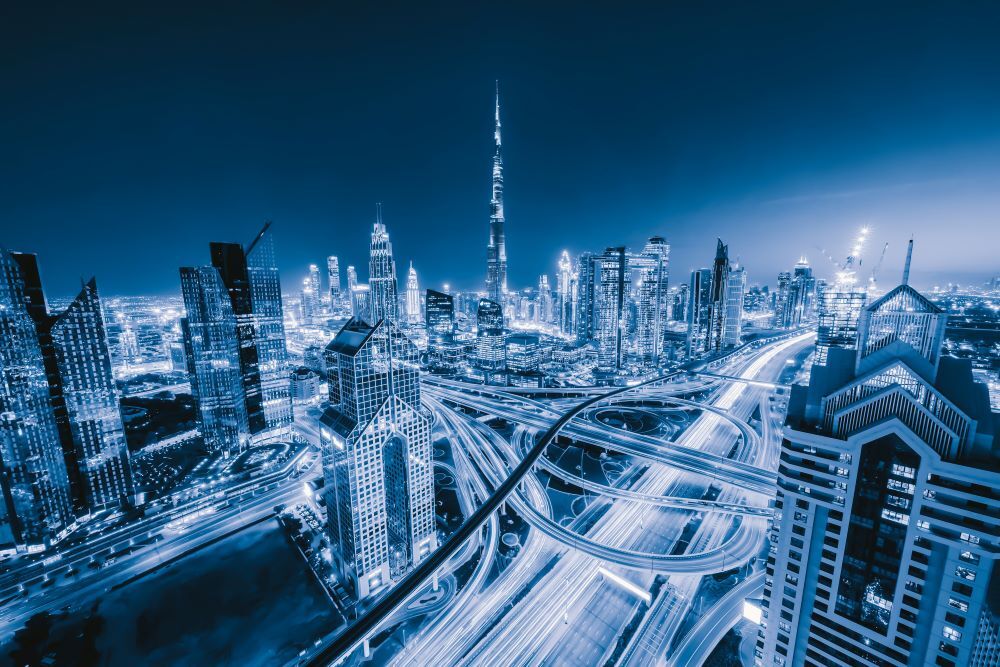
A City Built Around Digital Convenience
Dubai’s smart-city transformation begins with government services. Over the past decade, the city has moved from paper-led administration to digital-first living, where many essential transactions can be completed through a phone.
Residency documents, utility payments, traffic fines, vehicle services and municipal requests are now part of a more unified digital landscape. For residents, this means fewer counters, fewer printed forms and fewer lost hours. For the city, it means cleaner data, quicker processing and a public sector that can keep pace with growth.
DubaiNow sits at the centre of this experience, bringing many services into one application. UAE Pass completes the picture through secure digital identity, authentication and signatures. Together, they have turned government interaction into something closer to a civic utility: discreet, immediate and increasingly effortless.
Paperless Government As A Turning Point
Dubai’s paperless transformation remains one of the most pivotal moments in its smart-city journey. By removing paper from government transactions, the city changed not only the mechanics of administration, but the mood of public service itself.
The value is partly environmental, but its wider impact is operational. Paperless government reduces duplication, limits manual delays and allows entities to work through shared digital systems.
For a global city shaped by business, mobility and international residents, this matters. Dubai’s appeal depends on how smoothly people can live, invest and manage documents. Digital governance is therefore not a side note. It is part of the city’s economic architecture.
Smart Mobility And The Future Of Movement
Few things reveal a city’s intelligence more clearly than the way people move through it. Dubai’s mobility strategy has long been tied to automation, data and sustainability, from the driverless Dubai Metro to smart traffic systems and autonomous vehicle trials.
The ambition is not simply to introduce futuristic transport. It is to build a network that can respond to population growth, reduce congestion and improve safety. Intelligent traffic systems, real-time monitoring and AI-supported road management allow the city to read movement as it happens, clearing the path for planning that is less reactive and more predictive.
Autonomous mobility is another important strand of this vision. Driverless taxis, autonomous logistics and smart public transport point towards a more efficient model.
Data As The City’s Digital Nervous System
Behind every smart city is data. In Dubai, data is increasingly treated as infrastructure in its own right. Integrated platforms allow information from different entities to be brought together, analysed and used to improve planning, service delivery and daily operations.
This is one of the less visible, but most important, parts of the city’s transformation. Transport, energy, utilities, public safety, licensing, planning and municipal services all produce information. When that information is connected, Dubai can identify patterns, anticipate demand and make better decisions.
For residents, the result may appear as faster services, smoother roads or more efficient utilities. For businesses, it creates a more predictable environment.
The Invisible Infrastructure Of Daily Life
A smart city depends on what most people never see. Beneath Dubai’s visible architecture sits a growing network of connected systems that collect, read and respond to real-time information.
IoT sensors can support traffic flow, monitor buildings, manage lighting, track water usage, improve waste collection and help energy networks operate with less waste. Paired with artificial intelligence, this data allows the city to move from reaction to prediction. A road can be managed before congestion builds. A building can adjust lighting, air quality and temperature more efficiently. A utility network can detect strain before it becomes a problem.
This is where smart-city maturity becomes most tangible. Technology is no longer only something residents use. It is part of the city’s hidden operating system.
AI In Everyday Urban Life
Artificial intelligence is becoming one of the strongest pillars of Dubai’s next phase. The city is moving beyond digitalisation towards AI-supported services, predictive analytics and more automated decision-making.
This can be seen in traffic monitoring, municipal platforms, smart inspections, customer service, safety systems and emerging command centres. These tools help the city process information at speed and identify issues earlier.
The most important point is that AI in Dubai is increasingly practical. It is not limited to experimental showcases. It is being used to support roads, licensing, inspections, legal processes and wider city management.
Smart Safety And Public Services
Dubai’s Smart Police Stations show how technology can reshape even traditional public services. These unmanned stations allow residents and visitors to access police services around the clock, without needing a conventional front desk.
A service once tied to a physical station, staff availability and working hours becomes accessible, automated and multilingual. Reports, certificates, traffic services and other requests can be handled through a digital environment designed for privacy and speed.
The broader significance is clear. Dubai is not only digitising convenience-led services. It is extending smart infrastructure into safety, security and public confidence.
Smart Utilities And Sustainable Infrastructure
A smart city must also manage its resources intelligently. In Dubai, utilities are increasingly supported by smart grids, digital meters, renewable energy planning and advanced monitoring systems.
For a desert city with rapid urban growth, this is especially important. Smart utilities help detect faults, manage consumption, support solar energy and improve the efficiency of water and electricity networks. They also help residents understand and control their own consumption more easily.
This is where smart-city ambition connects directly with sustainability. A city cannot be considered future-ready if it is only fast and connected. It must also become more resource-conscious.
A Living Laboratory For Innovation
Dubai’s smart-city identity is strengthened by its innovation ecosystem. Government entities, free zones, global technology companies, start-ups, accelerators, financial institutions and major technology events all feed into digital momentum.
Expo City Dubai gives this idea a physical setting. Designed around sustainability, walkability and digital integration, it shows how smart-city principles can work at district scale. Electric mobility, energy-efficient buildings, solar power and real-time resource monitoring make the district a practical example of intelligent urban systems at work.
The city’s advantage lies in its willingness to pilot ideas quickly. From autonomous transport and AI platforms to digital government and smart urban development, Dubai functions as a live testing ground for emerging technologies. For businesses and residents, it creates a city that is constantly being refined.
In this sense, Dubai’s smart-city evolution is not a single project. It is a way of building, governing and living. Its confidence lies not only in imagining the future, but in turning future-facing ideas into systems that work on the ground.