

The World's Greatest Stage: Everything You Need to Know About the FIFA World Cup 2026
When the referee's whistle sounds at the Estadio Azteca in Mexico City on 11 June 2026, it will mark the beginning of something genuinely unprecedented. The 23rd edition of the FIFA World Cup is not merely the next chapter in football's oldest and most prestigious story, but a complete reimagining of what a World Cup can be. Spanning three nations, sixteen cities, and 39 days of competition, the 2026 tournament is the largest, most ambitious, and most eagerly awaited footballing event in history.
For the discerning football enthusiast, this is essential reading.
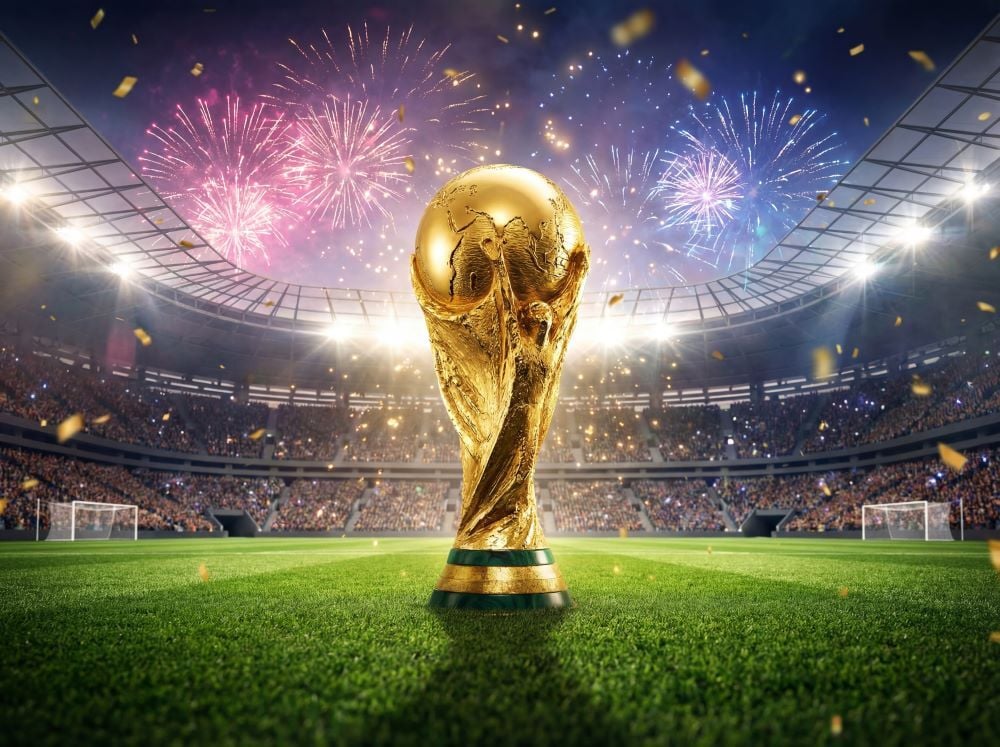
A Tournament of Record-Breaking Scale
The headline figures alone demand attention: forty-eight teams, one hundred and four matches, and sixteen host cities across three host countries. The tournament runs from 11 June to 19 July 2026. To put that into context, the Qatar 2022 edition featured 32 teams and 64 matches; this summer's competition represents a seismic expansion of football's global showpiece.
The 23rd edition of the FIFA World Cup will see 48 nations compete for the prize in a 39-day tournament across Canada, Mexico, and the United States, as the tournament returns to North America after 32 years. It is the first time in the competition's history that three nations have jointly hosted the event.
The format has been restructured to accommodate the expanded field. The previous format of 32 teams in eight groups has been replaced by one featuring 12 groups of four. The top two teams in each group, plus the eight best third-placed teams, will advance to the round of 32, and the knockout stage will begin there. For followers accustomed to previous editions, it is worth familiarising oneself with this new bracket logic before the group stage concludes.
The Host Cities: A Continent at Your Disposal
The sixteen host cities have been drawn from across the breadth of North America, offering an extraordinary range of cultural experiences for travelling supporters. The United States will host matches in Atlanta, Boston, Dallas, Houston, Kansas City, Los Angeles, Miami, New York/New Jersey, Philadelphia, San Francisco Bay Area, and Seattle. Mexico provides three iconic locations in Mexico City, Guadalajara, and Monterrey, while Canada contributes Toronto and Vancouver.
The cities have been grouped into regional clusters - Western, Central, and Eastern - to minimise unnecessary travel for teams and supporters alike during the group stage. It is a sensible and elegant solution to the logistical challenge of hosting a tournament across a continent.
The venues themselves are remarkable. The Estadio Azteca in Mexico City, with a capacity of at least 87,000, and AT&T Stadium in Arlington, Texas, with a capacity of between 80,000 and 105,000, are the largest venues in the tournament. The Azteca, which will host the opening match, becomes the first stadium in history to host three World Cup opening fixtures, a distinction befitting one of football's most iconic grounds.
The final will be played at MetLife Stadium in the New York/New Jersey host market, giving the 2026 World Cup final one of the largest stages in global sport. FIFA president Gianni Infantino has confirmed the final will feature a half-time show, with Coldplay involved in the event at MetLife Stadium on 19 July, in a move inspired by the NFL's Super Bowl.
The Storylines: History in the Balance
No World Cup arrives without its defining narratives, and 2026 promises more than most.
The central figure, as has been the case for the better part of two decades, is Lionel Messi. With more World Cup appearances (26) than any male player, the Argentine captain is set for a record sixth tournament in North America. At 38, it could well be his final appearance on football's greatest stage. Argentina aim to become the first back-to-back male world champions since Brazil in 1962, though recent history is against them as three of the last four defending champions were eliminated in the group stage.
The last six World Cups have seen six different winners: Argentina in 2022, France in 2018, Germany in 2014, Spain in 2010, Italy in 2006, and Brazil in 2002. A run of such variety had never previously occurred in World Cup history. Whether 2026 continues that pattern or bucks it entirely remains one of the tournament's most compelling open questions.
As for the favourites, Spain is at the top of the ladder, followed closely by France, England, Brazil, and Argentina, with Portugal not far behind. Messi himself, in characteristically measured fashion, has acknowledged the competition: he has singled out France as particularly formidable, describing them as looking very strong again, and highlighted Spain's impressive generational rebuild as another serious threat.
Beyond the established powers, the constellation of individual stars is genuinely extraordinary, from Messi and Portugal's Cristiano Ronaldo to Kylian Mbappé of France and Erling Haaland of Norway. Four nations will make their World Cup debuts (Cape Verde, Curaçao, Jordan, and Uzbekistan), ensuring fresh stories will emerge alongside the familiar ones.
Key Dates at a Glance
For those planning their summer around the tournament, the essential milestones are as follows:
- 11 June — Opening match: Mexico vs. South Africa, Estadio Azteca, Mexico City
- 11–30 June — Group stage (all 16 host cities)
- 4–7 July — Round of 32
- 8–11 July — Round of 16
- 12–15 July — Quarter-finals
- 16–17 July — Semi-finals
- 18 July — Third-place match, Hard Rock Stadium, Miami
- 19 July — The Final, MetLife Stadium, New York/New Jersey
A Summer Not to Be Missed
The FIFA World Cup 2026 is already shaping up to be more than the latest edition of an iconic football tournament. It is a once-in-a-generation convergence of sporting history, geopolitical spectacle, and human drama, played out across some of the most vibrant cities in the world. Whether one's interest lies in the tactical chess of the knockout rounds, the raw theatre of a debut nation's first appearance, or the possibility of witnessing a legend complete an extraordinary final chapter, this summer will offer it in abundance.
For old and new contenders alike, the world's greatest stage awaits.