

Modern Bedroom Designs: Inside the New Language of Super-Prime Living
A bedroom reveals more about a home than its grandest reception room. It is where the architecture becomes quieter, where materials are chosen for touch, and where luxury is measured in light, silence and proportion.
In the most considered modern interiors, the bedroom is no longer arranged around a bed alone. It is designed as a private retreat, with built-in headboards, concealed lighting, natural stone, soft textiles and bespoke joinery working together to create a space that feels composed rather than decorated.
At its finest, an ultra-luxury bedroom carries the ease of a five-star suite, but not its anonymity. It feels personal, permanent and deeply still.
The Architectural Bedroom
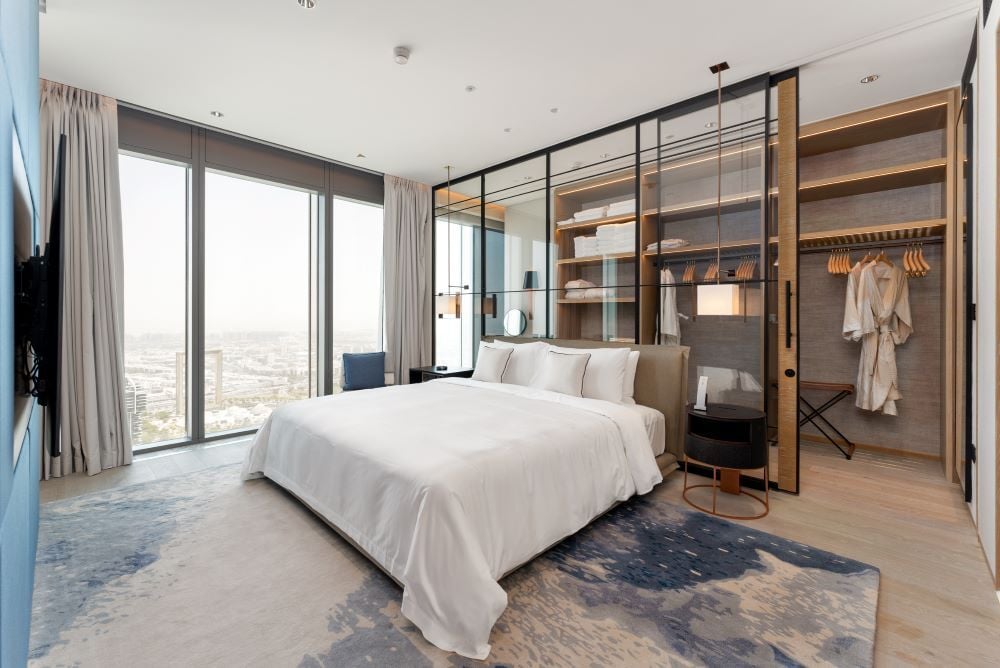
The architectural bedroom is built around structure rather than furniture. In ultra-luxury interiors, the headboard is rarely treated as a separate piece. It becomes part of the room itself: a full-height upholstered wall, a fluted timber panel, a leather-clad backdrop or a marble-framed installation that gives the bed a sense of permanence.
This type of bedroom works best when everything feels integrated. Side tables, reading lights, sockets and shelving can be built into the wall, creating a finish that feels practical but almost invisible. The design is not trying to impress through clutter. It relies on proportion, precision and the feeling that every line has been considered.
In softer schemes, linen, suede, bouclé or velvet bring warmth to the headboard wall. In bolder rooms, book-matched marble, smoked mirror finishes or dark timber can create the atmosphere of a private hotel suite.
The Statement Material Bedroom
Some bedrooms are defined by one remarkable material moment: a wall of warm walnut, a slab of Nero Marquina marble, or perhaps a travertine ledge or panel of pale oak. Used with restraint, these materials give the room identity without overwhelming it.
The most successful statement material bedrooms do not allow every surface to compete. They create contrast: smooth stone against soft upholstery, dark wood against crisp bedding, brushed metal beside matte plaster. The result feels rich, but controlled.
This is where true luxury becomes tactile. It is not only about what can be seen, but what the room suggests through weight, texture and finish.
The Softly Lit Bedroom
A modern luxury bedroom should never depend on one harsh ceiling light. Its atmosphere is built through layers.
Concealed cove lighting can wash the ceiling with a soft glow. LED strips behind wall panels can add depth around the bed. Pendant lights can replace traditional bedside lamps, while discreet reading lights bring function without clutter. Floor lamps and wall sconces help the room move from morning brightness to evening calm.
Dimmers are essential. A bedroom should be able to feel bright and composed during the day, warm and intimate at night, and softly lit during the quiet hours in between.
The Analogue Bedroom
The analogue bedroom is one of the most refined directions in modern design. It is shaped around the quiet removal of visual noise. Technology is still present, but it is increasingly concealed. Screens disappear behind sliding panels. Charging points are hidden inside joinery. Bedside tables are kept free from the clutter of devices.
This creates a room built around rest, tactility and slower rituals. Books, textured rugs, linen-shaded lamps, natural bedding and personal objects replace the glow of screens. The luxury is not in rejecting technology, but in keeping it invisible.
It is a bedroom for people who want the day to end gently.
The Wellness-Led Bedroom
The most sophisticated wellness details in a bedroom are often the least visible. Circadian lighting, acoustic softness, blackout curtains, breathable bedding and carefully controlled air quality can transform the room without making it feel clinical.
This is where luxury becomes sensory rather than decorative. Sounds can be softened by thick wool rugs, light filtered through linen curtains, and warmth created through a careful choice of upholstery. Dimmed lighting helps the room move gradually from day to night, guiding the interior ambience.
The value of the wellness-led bedroom is felt in the way the body settles.
The Private Suite Bedroom
The private suite bedroom is designed as more than a place to sleep. It creates a complete retreat within the home.
A chaise longue by the window, a pair of curved armchairs, a low table or a minimalist fireplace can turn a large bedroom into a space for reading, conversation or quiet reflection. This is especially effective in generous primary suites, where scale needs purpose.
Without a lounge zone, an oversized bedroom can feel empty. With one, it becomes layered and liveable. The best examples feel connected to the sleeping area, but never crowded into it.
The Soft Cocoon Bedroom
The latest modern bedrooms are moving away from hard, rectilinear compositions towards softer silhouettes. Curved bed frames, rounded benches, arched niches and sculptural lounge chairs give the room a more enveloping quality.
In an ultra-luxury setting, these forms should feel architectural rather than playful. A curved upholstered headboard can soften a stone wall. A rounded chaise can balance a strong timber backdrop. Even a bullnose edge on a bedside ledge can make the room feel calmer and more resolved.
This design direction works because it makes luxury feel protective, not formal.
The Warm Monochrome Bedroom
Modern luxury still favours calm colours, but the palette has become warmer and more layered. Cream, ivory, taupe, clay, chocolate, caramel, stone and warm grey create serenity without feeling cold.
Yet a neutral bedroom only feels luxurious when the textures are rich enough. Silk carpets, cashmere throws, linen bedding, velvet benches, leather panels and wool curtains can give depth to a restrained palette. The eye does not rely on colour alone. It moves across surfaces, shadows and tonal variations.
The warm monochrome bedroom is quiet, but never flat.
The Dark Modern Glamour Bedroom
For those who prefer a stronger mood, dark bedroom schemes can feel deeply luxurious. Charcoal walls, black-stained timber, smoked glass, bronze metalwork and dramatic stone can create a cocoon-like atmosphere.
This style works best when balanced with softness. Dark rooms need texture, not heaviness. A velvet headboard, layered bedding, warm lighting and a plush rug can prevent the space from feeling cold. Metallic accents should be used with control. Brushed brass, aged bronze or dark chrome can add refinement without turning the room into a showroom.
The Organic Minimalist Bedroom
Organic minimalism relies on natural materials, soft curves and a reduced colour palette. It is minimalist, but not bare.
Think white oak walls, travertine bedside tables, plaster finishes, linen curtains, low-profile furniture and sculptural lighting. The room feels calm, grounded and tactile. It works particularly well in homes where the bedroom opens onto a terrace, garden or view, allowing the outside environment to become part of the experience.
This look is ideal for those who want understated luxury rather than obvious glamour.
At its best, the modern bedroom becomes more than a place to sleep. It becomes a private sanctuary shaped by the temperament of its resident, a room that understands their need for stillness, comfort and return.