Published: 03 February 2026
Rolex is one of those rare luxury brands defined by breadth, appealing equally to entry-level enthusiasts as serious vintage collectors. Unlike names such as Patek Philippe or Richard Mille, where scarcity often dictates value, Rolex thrives on ubiquity. While the brand produces well over a million timepieces annually, demand for models like the Daytona and Submariner still consistently outstrips supply, driving an incredibly active secondary market. For some, the draw lies in technical ingenuity – the dual time-keeping of the GMT-Master II, for instance – but for others, it’s the style-forward cultural cachet of more storied models like the Daytona, worn by everyone from Paul Newman to modern-day tastemakers.
This popularity however, comes with pitfalls, and unless you have a long-standing relationship with an authorised retailer to rely on, accessing new references at retail often means lengthy, years-long waitlists. As a result, Rolex has one of the most active and discerning collector communities in horology, with heightened attention paid to production years, rarity and authenticity. Whether you’re investing in a vintage 1675 GMT-Master or buying a nearly-new Submariner, checking the serial number is one of the most important steps in verifying provenance and protecting your purchase.
Here’s how to do it.
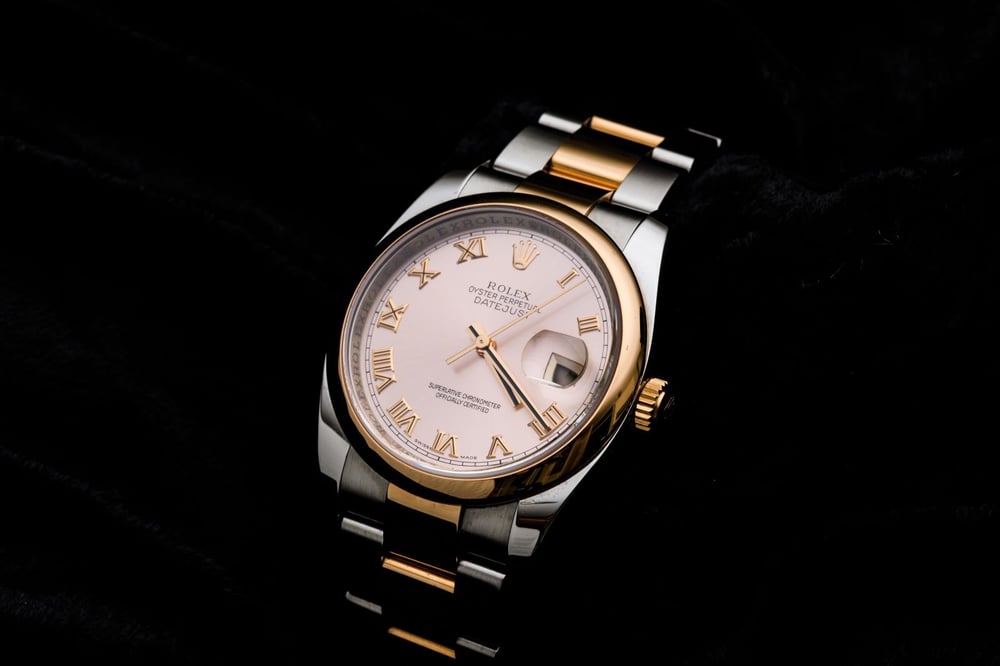
What Is a Rolex Serial Number?
The serial number is a unique identifier engraved on every Rolex timepiece, designed to distinguish one watch from another. No two serial numbers are the same, and much like a VIN on a car, it helps track production details, confirm authenticity, and – in many cases – determine the year a watch was manufactured.
Until 2010, these numbers followed a sequential system, meaning you could estimate a watch’s production year by cross-referencing it with other known serial ranges. This made serial numbers especially useful in dating vintage pieces and verifying whether a model was, for instance, a true 1971 Explorer or a later reproduction.
Today, the system is less linear. Since 2010, Rolex has switched to a randomised alphanumeric format, making it harder to determine production dates from the serial alone. It’s also worth noting that a serial number is different from a reference number. The reference refers to the model type (e.g., 116500LN for a ceramic Daytona), while the serial refers to the individual watch.
Where to Find the Serial Number on a Rolex
Depending on when it was made, the serial number can appear in one of two locations. On models produced before 2007, it’s engraved between the lugs at 6 o’clock. To view it, you’ll need to carefully remove the bracelet – a job best left to a professional if you’re not familiar with the process. Opposite, at 12 o’clock, you’ll also find the reference number, which indicates the model.
In more recent models, Rolex began etching the serial number directly onto the inner rehaut (the reflective ring beneath the crystal), also near 6 o’clock. This has been standard since 2010 and it means you don’t need to remove the bracelet to view the number.
In both cases, the engraving should be clean, sharp, and consistent with Rolex’s famously high standards. Fuzzy, uneven, or misaligned markings may signal a counterfeit, which is why checking the serial number is such a crucial step when buying pre-owned.
How to Check a Rolex Serial Number
Once you've located the serial number, the next step is to cross-reference it with a trusted serial number database. For models produced before 2010, this can help determine the approximate year of production – a key detail for collectors, especially when evaluating vintage references. Several reputable platforms offer free lookup tools, including GMT Watches, Langedyk Vintage Watches, and Bob’s Watches, each maintaining detailed charts based on Rolex’s historic numbering system.
For example, a serial beginning with “D” points to a watch produced around 2005, while one in the “R” range dates to the late 1980s. These timelines can also help flag inconsistencies, like a supposedly “new” Submariner with a serial that indicates a much earlier production year.
Here are some examples of pre-2010 models with date-specific codes:
- L-series → 1989
- E-series → 1990
- X-series → 1991
- N-series → 1992
- S-series → 1993–1994
- W-series → 1995
- T-series → 1996
- U-series → 1997–1998
- A-series → 1999–2000
- P-series → 2000–2001
- Y-series → 2002–2003
- F-series → 2003–2005
- D-series → 2005–2006
- Z-series → 2006–2007
- M-series → 2007–2008
- V-series → 2008–2010
It’s important to remember that Rolex doesn’t offer an official public database, so any online check is based on data collected by watch experts and dealers over time. While it won’t tell you the exact sale date, a Rolex serial number check can give you valuable insight into when the watch was made, and whether its papers, box, and price align with that timeline.
How to Check the Serial Number on New Rolexes
For modern Rolex watches produced from 2010 onward, the serial number is no longer a tool for dating the watch. That’s because Rolex introduced a randomised system to enhance privacy and make counterfeiting more difficult. While these serials no longer correspond to production years, they’re still essential for verifying authenticity and matching the watch to its original documentation.
If you're buying a newer model on the secondary market, the key is to ensure the serial engraved on the case matches the one on the warranty card or certificate of origin. Any discrepancy is a red flag. Although Rolex doesn’t offer a public verification service, authorised dealers and service centres can access internal systems that trace a watch’s manufacturing and service history. For that reason, your best protection is still a trusted seller, full paperwork, and a clear serial number engraving that aligns with Rolex’s known standards.
Final Thoughts
For those navigating the secondary market, buying from a trusted source is everything. One of those names is Sotheby’s – the world’s oldest auction house, founded in 1744. Whether from the auction block or through a private client service, every Rolex offered through Sotheby’s is authenticated by specialists and comes with a clear record of origin and ownership. In a market where serial numbers, papers, and originality can make or break a deal, that kind of assurance is worth its weight in gold.