

Investing in Jumeirah Islands: Limited Supply, Rising Values and a Changing Villa Stock
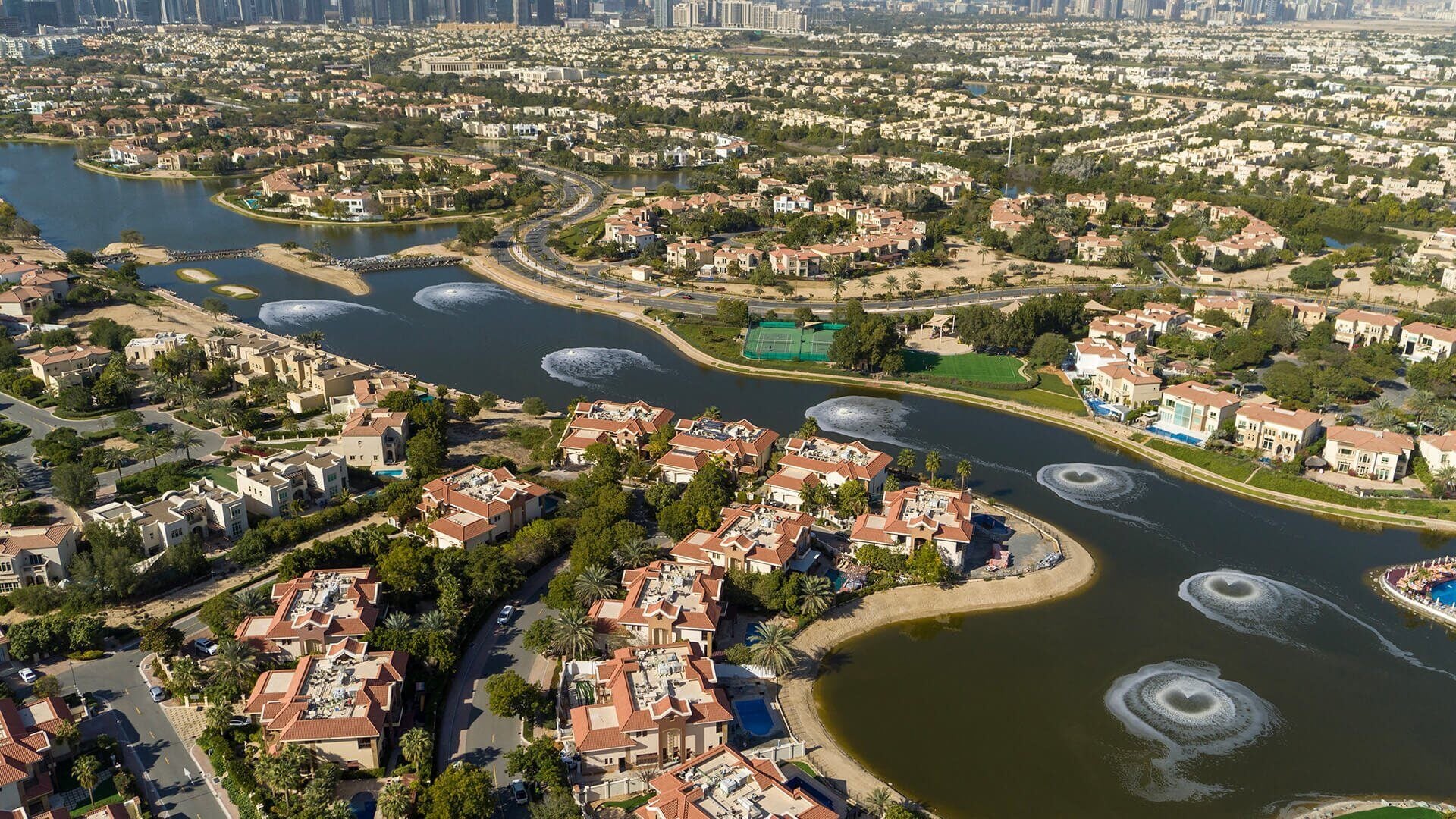
By January 2025, villa values in Jumeirah Islands had roughly tripled from their pandemic-era levels. ValuStrat recorded annual capital growth of 42.4 per cent, compared with 31.2 per cent across Dubai’s villa market as a whole. The increase is notable because Jumeirah Islands is not a newly launched development establishing its first market price. It is a mature community of 851 villas spread across 46 islands and 19 lakes.
That maturity now forms an important part of the investment case. The original supply of detached homes is finite, while the properties within it are becoming increasingly individual. Some villas remain close to their first configuration; others have been extended, replanned or comprehensively rebuilt by their owners. Jumeirah Islands is therefore being shaped by two forces at once: the value of an established, limited housing stock and the private capital being invested in the houses themselves.
Why the Investment Case Has Strengthened
Spread over 284 hectares, Jumeirah Islands was planned as a low-density villa community around lakes, landscaped spaces and residential clusters. Its position near Dubai Marina, Jumeirah Lakes Towers and Sheikh Zayed Road gives it access to some of the city’s principal employment and leisure districts without changing its predominantly residential character.
For investors, the more significant feature is that the original masterplan places a limit on what can be reproduced within the community. This gives the land a continuing role in the way individual properties are valued. A house may be remodelled several times over its life, while its relationship with the lake, garden and neighbouring plots remains largely fixed. As Dubai’s villa market has strengthened, those underlying characteristics have become more consequential.
The community also benefits from being established rather than dependent on future delivery. Mature planting, roads, lakes and neighbourhood facilities already form part of daily life, allowing purchasers to judge the setting as it exists rather than through plans for what may arrive later.
How Values Have Changed Since the Pandemic
The post-pandemic repricing of Dubai’s villa market has been particularly pronounced in established residential communities, and Jumeirah Islands has been among the stronger performers.
ValuStrat’s January 2025 figures put annual capital growth for villas in the community at 42.4 per cent. By that point, values had roughly tripled from pandemic-era levels. The pace of appreciation exceeded the corresponding increase across Dubai’s villa market, which the same index placed at 31.2 per cent over the year.
Those figures describe a market that has changed substantially within a relatively short period. Before the pandemic, Jumeirah Islands was already an established freehold villa community. The subsequent rise has therefore not depended on the release of new phases or an expanding inventory of developer stock. It has taken place largely through the resale of existing homes.
That distinction matters because the community has not remained physically static while prices have risen. Owners have continued to invest in individual properties, and the difference between an original villa and a comprehensively altered one has widened. The market is consequently less uniform than the headline figures might suggest.
A buyer today may be comparing houses that began with the same basic plan but now differ markedly in internal area, technical specification, architecture and relationship with the garden. Community-wide appreciation provides the context; the history of each property increasingly determines where it sits within that market.
How Owners Are Changing the Original Villa Stock
The original cluster villas were built around three principal internal layouts: Entertainment Foyer, Garden Hall and Master View. These typologies once gave buyers a relatively straightforward way to understand the housing stock. After years of private alteration, they now describe the starting point more often than the finished house.
The scale of intervention varies. Some properties have been refreshed within their existing footprint, while others have undergone substantial structural work. Owners have enlarged internal areas, reconfigured reception and family rooms, introduced wider glazing and renewed building services. Kitchens have been repositioned around contemporary family use, while gardens, pools and terraces have been reconsidered as extensions of the main living areas.
More ambitious projects have altered the architectural character of the original villa altogether. In such cases, the value being added is not confined to decorative finishes. Additional authorised floor area, renewed air-conditioning and electrical systems, new façades, improved glazing and substantial changes to circulation can materially change the quality and utility of the house.
This private investment is producing a second generation of Jumeirah Islands properties. The original masterplan remains recognisable, but the villas within it increasingly reflect different periods of ownership and different levels of capital commitment.
It also changes the nature of comparison within the community. An Entertainment Foyer or Garden Hall that remains close to its original form may sit only a short distance from a house derived from the same typology but extensively rebuilt. Their common starting point no longer makes them equivalent assets.
A More Individual Market
As the housing stock has evolved, Jumeirah Islands has become increasingly difficult to read through original villa type or headline price per square foot alone.
The plot still establishes characteristics that cannot readily be altered: waterfront position, garden depth, spacing and the relationship with neighbouring homes. The house then adds a second layer. Its current floor area, planning, building services and the quality of completed structural work determine how much of the original property has been retained and how much has been recreated.
This produces several distinct propositions within one community. An original villa gives a purchaser the opportunity to undertake the next phase of work themselves. A partly updated house may have addressed some technical or spatial limitations while leaving scope for further change. At the other end of the market, a comprehensively rebuilt property represents years of design, approvals and construction already absorbed by the current or previous owner.
The difference is increasingly important after the sharp rise in community values. When the underlying land has already appreciated substantially, the quality of what has been built upon it carries greater weight in distinguishing one house from another.
Value Created Within a Fixed Framework
Jumeirah Islands has developed in an unusual way for a mature residential community. Its physical framework remains largely the one established by the original masterplan, yet the houses within it are being steadily rewritten by private owners.
That helps explain why its investment story now extends beyond limited supply alone. Post-pandemic price growth has raised the value of the underlying villa stock, while continued private expenditure has created much greater differentiation within it. The result is a market in which an original plan name tells less than it once did.
For a prospective purchaser, the most revealing comparison is therefore between the enduring qualities established by the masterplan and the permanent improvements made since. The lakes, plots and low-density setting provide the fixed framework; the next stage of value is increasingly being created house by house.
Read More