

Why Views And Privacy Matter More Than Size In Luxury Real Estate
For decades, the unspoken arithmetic of luxury property was simple: bigger meant better. Square footage was the headline figure, the number that justified the price tag and gave a villa its bragging rights. In Dubai's ultra-prime market, that equation is being quietly rewritten. The buyers who can afford anything are no longer chasing scale for its own sake. They are paying the steepest premiums for two things that cannot be manufactured at will: an uninterrupted view and the certainty that no one is watching.
This is not a fleeting preference. Dubai's luxury property market has reached a point where two homes with similar layouts, finishes and even locations can sit millions of dirhams apart in price, with the gap explained almost entirely by one factor that cannot be replicated or expanded: protected views and genuine privacy. It has been noted by industry specialists that buyer priorities in the city have shifted sharply over the past two years towards privacy, wellness and the removal of friction, with turnkey homes increasingly preferred over anything requiring renovation. Waterfront properties in Dubai now trade at a 30 to 60 per cent premium over comparable inland homes, and where a view is genuinely protected from future development, brokers say there is effectively no ceiling on price. The shift reflects how a new generation of ultra-high-net-worth buyers, increasingly younger and increasingly global, defines value.
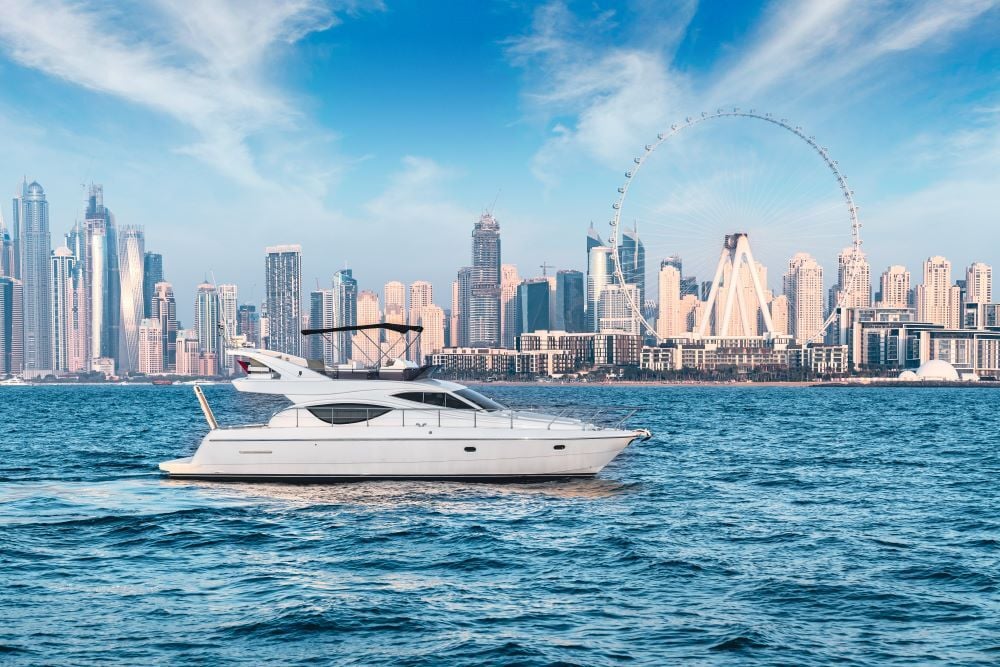
The scarcity of a view
A floor plan can be redrawn. A wing can, in theory, be added. A sightline over open water or an uninterrupted horizon cannot. This is the quiet logic driving prices on Dubai's most exclusive addresses. On Jumeirah Bay Island, the seahorse-shaped enclave connected to the mainland by a single bridge, just 128 plots exist and almost none come to market voluntarily. Brokers report being offered hundreds of millions of dirhams for individual mansions and turned down outright, simply because the view and the address cannot be replicated elsewhere. Per square foot, Jumeirah Bay now commands some of the highest rates in Dubai, ahead of Palm Jumeirah and Emirates Hills, because supply is fixed and demand is not.
The same dynamic plays out at the Bulgari Resort and Residences, where the brand's Lighthouse tower has become a benchmark for the wider ultra-prime segment. It is not size that anchors its value; many of its apartments are modest by villa standards. Buyers are paying for an unobstructed line of sight across the Gulf, married to architectural restraint that does not compete with the view it is selling. Dubai is now ahead of every other city in the world for ten-million-dollar-plus home sales, with activity at that level matching London and New York combined, a reminder of how concentrated demand has become for waterfront addresses with a genuinely unobstructed outlook.
Privacy as the new status symbol
If the view is the asset that cannot be built, privacy is the asset that cannot be bought back once lost. Wealthy buyers, particularly those whose lives are already visible through business or public profile, increasingly treat discretion as a primary specification rather than a pleasant extra.
The data bears this out. Research conducted by the global headquarters of Sotheby’s International Realty found that wealthy buyers consistently rank privacy and security above amenities or even multigenerational space, and separate industry analysis suggests a meaningful share of ultra-prime transactions now happen off-market entirely, conducted through private networks rather than public listings. This is not simply about avoiding publicity, but about controlling who knows an address exists, who can request a viewing, and who can never set foot past the gate.
Jumeirah Bay Island again offers the clearest illustration. There is one bridge in and out, no through-traffic, no casual visitors. Compare that with Palm Jumeirah, which remains a world-class address but is, by design, a busy one, with hotels, beach clubs and a monorail running through it. Buyers who want the Palm's pedigree without its footfall increasingly look towards the Bay, or towards newer low-density concepts such as Amali Island, structured as an invitation-only community rather than an open development. The willingness to forgo a larger pool of potential buyers at resale, in exchange for guaranteed seclusion today, tells its own story about where priorities now sit.
Why size alone no longer impresses
None of this makes square footage irrelevant. Space still matters, particularly for multigenerational households, with extended families increasingly buying single properties to house grandparents, adult children and their own families together. But size has stopped being a differentiator in its own right. Where a buyer can comfortably afford either an enormous house with a compromised outlook or a smaller one with an irreplaceable view, the latter is increasingly winning.
This is partly diminishing returns: beyond a certain footprint, extra space adds little to daily life and a great deal to running costs and staffing. It is also generational. Younger wealth holders, many of them entrepreneurs or recipients of the historic transfer of inherited capital now under way, have grown up travelling and show little interest in cavernous formality. What they want is a home that feels considered rather than vast, and that offers something genuinely irreplaceable.
What this means for developers and advisers
For Dubai's developers, the implication is straightforward, if not always comfortable. Marketing built around floor area and room counts is marketing aimed at a buyer who no longer exists at the top of the market. The more durable proposition is scarcity: of plots, of access, of outlook. A development with around 4,000 residential units, as Palm Jumeirah has across its fronds and crescent, will always struggle to command the same per-square-foot premium as one with 128, regardless of finish quality, because the latter is selling something structurally impossible to replicate.
For advisers and agents, the lesson is one of positioning rather than persuasion. The buyers driving this market already understand the value of discretion; they do not need convincing of it. What they are evaluating is whether a given address can actually deliver it, structurally and permanently, not merely promise it in a brochure. In a market where almost anything can be built, the genuinely luxurious asset is the one that cannot be.
Read More