

Adrian Smith: The Architect Behind Some of the World’s Most Recognised Landmarks
Adrian Smith is often introduced through the modern supertall tower. That is understandable, but it is not the whole story. Over a career spanning more than five decades, the Chicago-born architect has worked on towers, hotels and civic schemes that test how very large buildings should take their place in a city. Burj Khalifa in Dubai remains his best-known commission, not least because of its height, but it sits within a wider body of work that includes Jin Mao Tower in Shanghai, Central Park Tower in New York, FKI Tower in Seoul, Waldorf Astoria Beijing, Al Wasl Plaza in Dubai and the still-unfinished Jeddah Tower in Saudi Arabia.
The point, with Smith, is not simply that he builds high. His career is more interesting when looked at in the round: as a study in proportion, structure and the public presence of large buildings. His towers are often governed by clear architectural judgement – in the way they rise from the street, take the light, answer the climate and, most crucially, still feel at home within the city.
The Making of Adrian Smith
Adrian Smith was born in Chicago in 1944, in a city with architecture very much in its bones. Its confidence, from the great commercial towers to the discipline of its streets, would become a quiet but lasting influence on his working life. He first studied architecture at Texas A&M University before completing his Bachelor of Architecture at the University of Illinois at Chicago in 1969.
By then, Smith had already joined Skidmore, Owings & Merrill, better known as SOM, one of the most influential American architecture firms of the modern era. He entered the practice in 1967 and, over the following decades, built much of his early reputation there. In 1980, he became a Design Partner in SOM’s Chicago office. He later served as the firm’s chief executive from 1992 to 1995 and remained a Consulting Design Partner until 2006.
Those years at SOM were, in many ways, his apprenticeship in large-scale architecture. The practice brought architecture, engineering and city planning into close conversation, and Smith’s later work bears that out. His major buildings are seldom stand-alone objects. More often, they belong to a district, a commercial brief or a piece of city-making, where the building has to earn its place rather than simply occupy a site.
In 2006, Smith founded Adrian Smith + Gordon Gill Architecture with Gordon Gill and Robert Forest. Based in Chicago, the practice – usually known as AS+GG – continued his long interest in tall buildings, while giving greater weight to energy use, climate and performance. It was not a break with the past, but a new chapter: same eye for scale, sharper attention to what a building asks of its setting.
A Career Shaped by Cities
Before Burj Khalifa carried Adrian Smith’s name well beyond architectural circles, he had already worked on projects that changed the way large parts of cities were planned and used. At SOM, his work was connected with major schemes in Chicago, including Cityfront Center, Lake Shore East and the Millennium Park master plan. In London, he was also associated with the Canary Wharf master plan and its related commercial buildings.
This ability to move between architecture and master planning has become one of the steady threads in his career. It helps explain why developers and civic clients have turned to him for projects where a building has to carry symbolic weight, certainly, but also work properly on the ground. That balance is not always easy to strike, and in Smith’s best work it is where the architecture earns its keep.
Burj Khalifa, Dubai
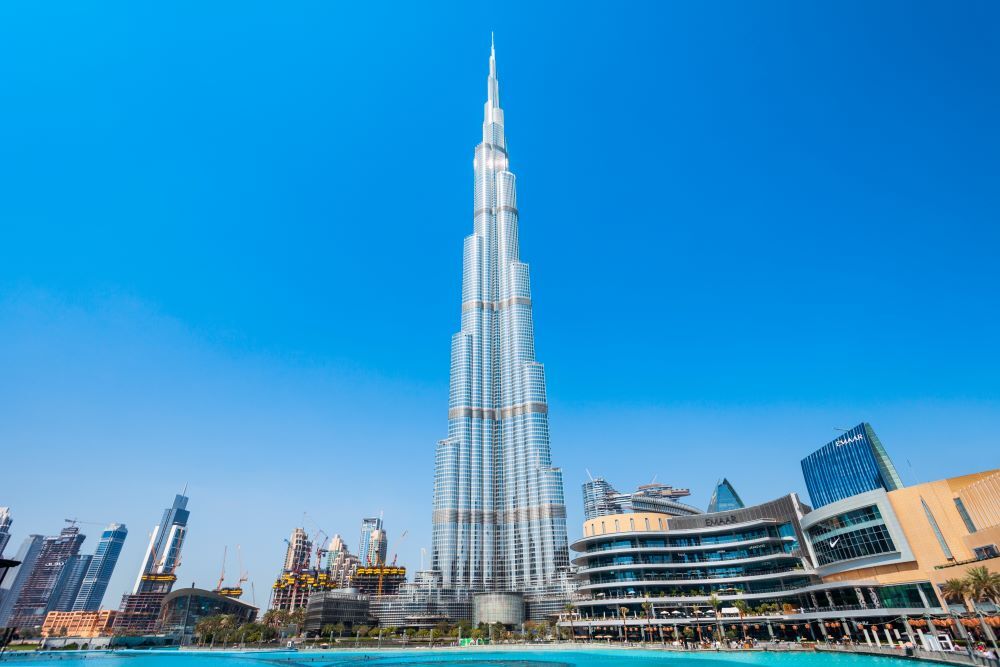 image source: saiko3p / Shutterstock.com
Burj Khalifa remains the building most closely associated with Adrian Smith. Designed while he was at SOM, the tower opened in 2010 for Emaar Properties and rises to 828 metres, with more than 160 storeys. It is one of the clearest examples of how architectural form and structural engineering can work together – no small feat at this height.
The tower’s plan is based on a triple-lobed form, often linked to the Hymenocallis flower. Its structure uses a buttressed core, with three wings arranged around a central hexagonal core. As the building rises, the setbacks reduce its mass and help manage wind forces, while giving Burj Khalifa its familiar stepped profile.
What is striking about the building is how height never feels accidental. The tapering form gives it a measured ascent, reflecting Smith’s long interest in proportion. The project also includes practical environmental measures, including a condensation collection system that reuses water for irrigation. In Dubai’s hot and humid climate, that detail is more than a technical aside. It shows the hard graft behind designing at this scale, where even the most celebrated building still has to work properly day to day.
Jin Mao Tower, Shanghai
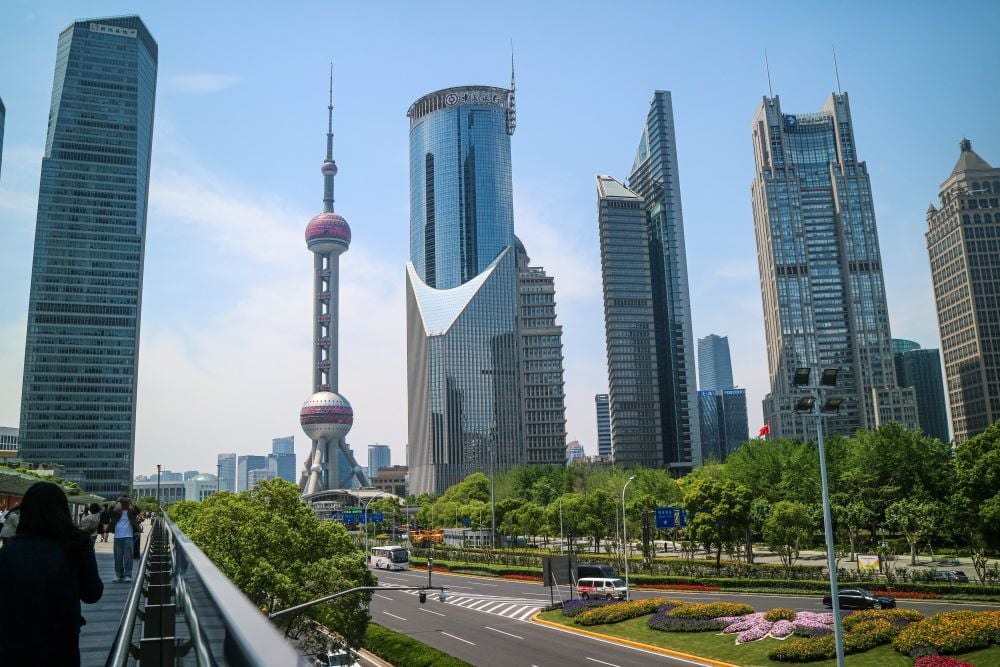 image source: Wichakorn Kitrungrot / Shutterstock.com
Completed in 1999, while Smith was still at SOM, Jin Mao Tower in Shanghai became one of the defining skyscrapers of late twentieth-century China. Its design draws on Chinese architectural references, particularly the rhythm and vertical layering associated with pagoda forms, but it never turns that influence into a literal copy.
The tower rises in clear steps, which helps give its height a sense of order. It feels strong and carefully balanced, rather than heavy or overdone. In Pudong, it became part of a new architectural language for a district where finance and international commerce were beginning to give Shanghai a sharper global presence.
Jin Mao Tower also shows how Smith worked local references into the building itself, so the connection feels built-in rather than added on. The cultural connection is handled with restraint, giving the building a sense of place without feeling heavy-handed.
Central Park Tower, New York
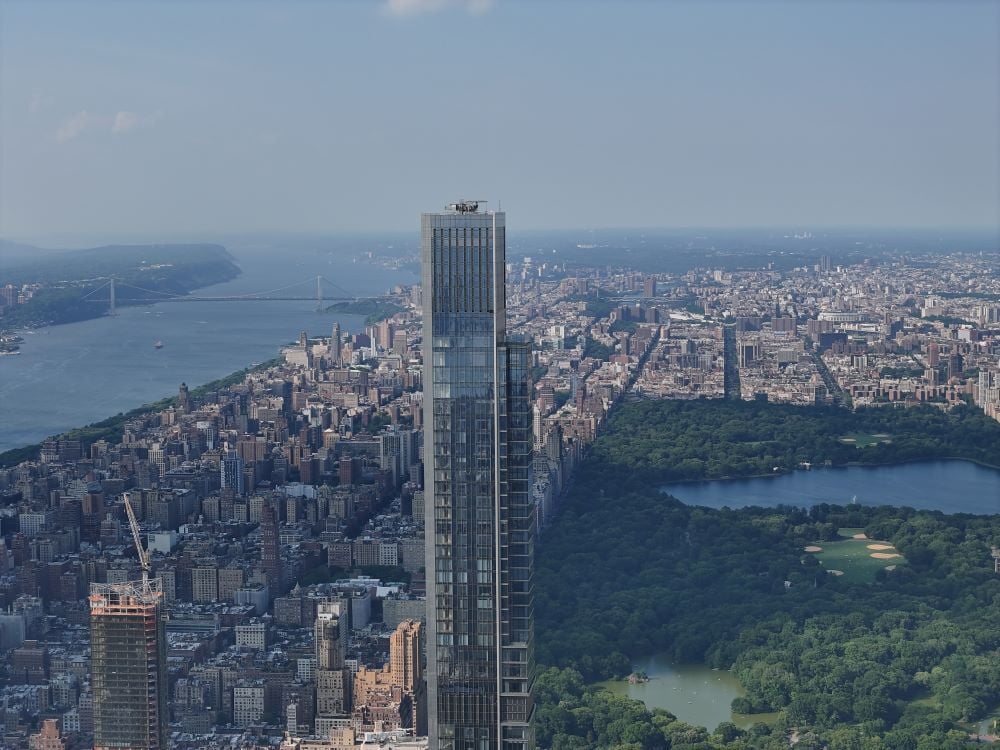
Central Park Tower in New York, completed in 2020, belongs to a very different kind of city setting. At 1,550 feet, it is one of the tallest residential buildings in the world, yet its design is shaped as much by Manhattan’s limits as by its height.
The building sits on Billionaires’ Row, where narrow plots, valuable air rights and protected views have led to a new generation of slender residential towers. Here, planning has to be exact. The structure, core and apartments must all be carefully arranged to make the most of views, protect usable space and respond to the tight grain of the city around them.
Central Park Tower places particular emphasis on corner residences and wide views over Central Park and Manhattan. Its form is not soft in the manner of Burj Khalifa. It is sharper and more exacting, shaped by site value, vertical living and the demands of a highly competitive property market. In that sense, it is a New York building through and through, shaped by value, constraint and the constant pressure of the city around it.
FKI Tower, Seoul
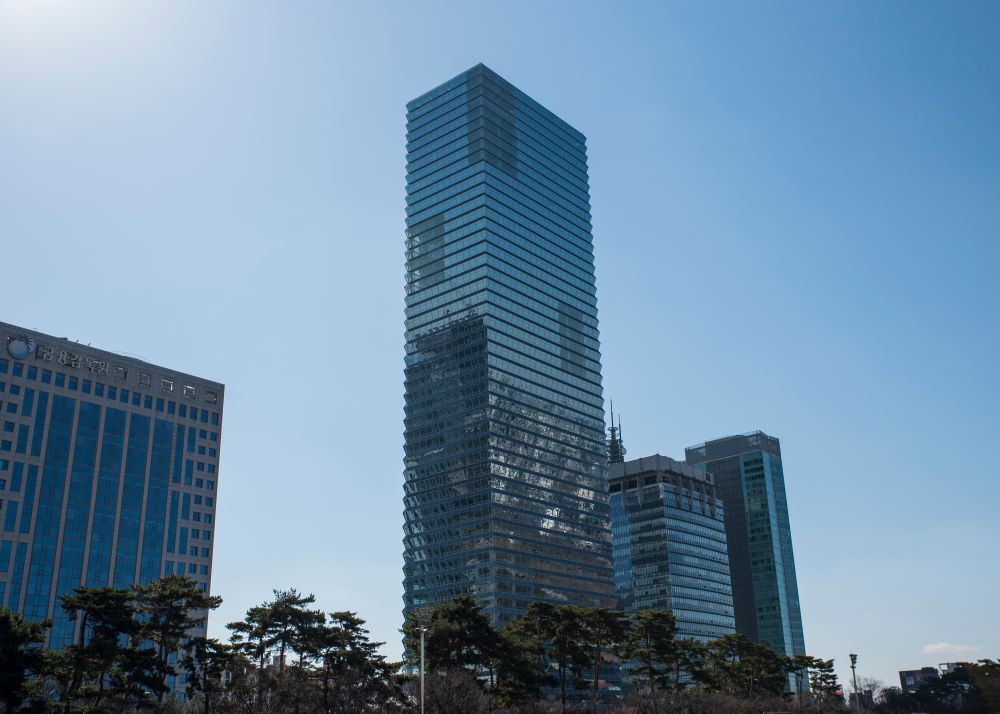 image source: letspicsit / Shutterstock.com
FKI Tower in Seoul, completed in 2014, is one of the clearer examples of Smith’s post-SOM interest in performance. Designed by AS+GG, the tower uses building-integrated photovoltaic panels across its façade. These are angled to collect solar energy, while other parts of the outer skin help control glare and reduce heat gain.
Here, the façade has a practical role. It gives the tower its folded character while helping it deal with light, heat and energy use. This is where Smith’s later work becomes particularly interesting. FKI Tower is still a corporate building, and a formal one at that, with its appearance shaped by purpose rather than surface effect, and the environmental measures built into the design from the outset.
Al Wasl Plaza, Dubai
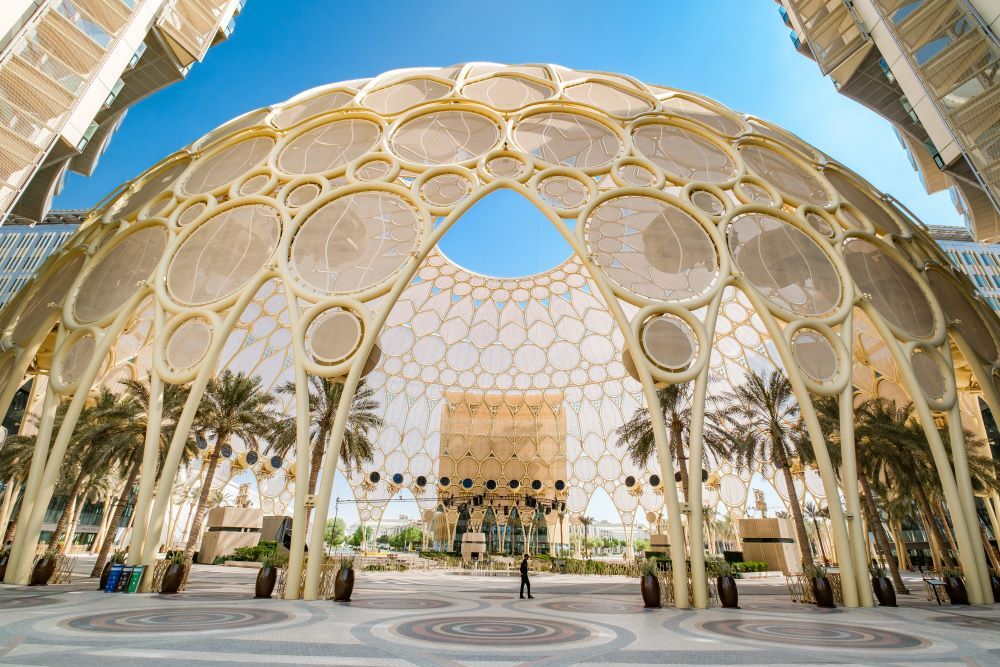 image source: ElenVD / Shutterstock.com
Designed for Expo 2020 Dubai and now part of Expo City Dubai, Al Wasl Plaza moves Smith’s work away from the single tower and towards public gathering. Created by AS+GG, it forms a central meeting place beneath a large dome-like structure, with shaded areas, water features and a 360-degree projection surface.
The project is not concerned with height, but with how people use the space. In Dubai, where outdoor public areas have to deal carefully with heat and comfort, that role is central to the design. The plaza provides shade, direction and a shared setting for movement, events and evening use.
Al Wasl Plaza also brings Smith’s later work back to his earlier experience in master planning. It is an architectural centrepiece, certainly, but it comes into its own through enclosure, climate and public movement rather than vertical scale.
Jeddah Tower, Saudi Arabia
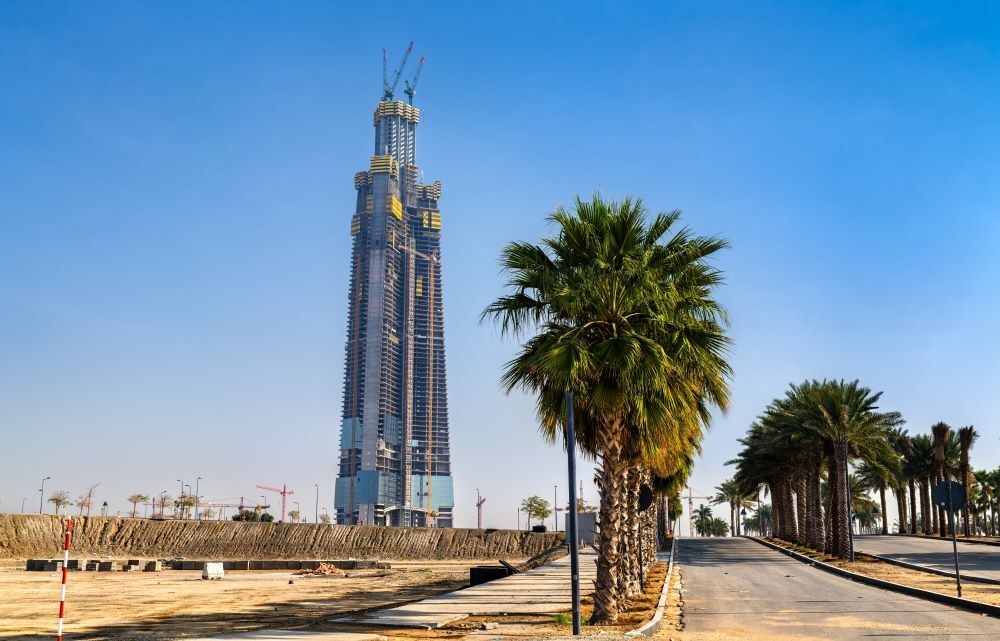 image source:Leonid Andronov / Shutterstock.com
Jeddah Tower is one of Smith’s most ambitious unfinished projects. Designed by AS+GG, it has been planned to rise higher than Burj Khalifa and, if completed as intended, become the tallest building in the world.
The project returns to a question that has followed Smith through much of his career: how far can a building rise and still feel architecturally controlled? As with Burj Khalifa, the answer rests on structure, tapering form and the careful handling of wind, use and proportion.
Jeddah Tower remains unfinished, but it still holds an important place in Smith’s work. Beyond the question of completion, it shows how height can become a statement of national ambition, urban growth and engineering confidence.