

What Is FAR in Real Estate - And Why Does It Matter?
When evaluating a piece of land, the most important question is rarely about what stands on it today; it is about what can be built there tomorrow. That question, in most real estate markets around the world, is answered in large part by a single metric: Floor Area Ratio, universally known as FAR.
For developers, it determines the upper ceiling of a project's commercial potential. For buyers and investors, it shapes the character of the community they are entering. For planning authorities, it is one of the primary instruments through which a city's density, infrastructure load, and long-term livability are managed. Understanding FAR is, in essence, understanding the grammar of urban development.
The Mechanics of FAR
At its core, FAR, also referred to in certain markets as Floor Space Index (FSI), is a straightforward ratio: the total built-up floor area of a building divided by the total area of the plot on which it sits.
FAR = Total Covered Area Across All Floors ÷ Total Plot Area
With that equation, the practical implications become clear quickly. On a plot of 1,000 square feet with an FAR of 2.0, a developer is permitted to construct a total of 2,000 square feet of floor space. That envelope may be realised as two floors of 1,000 square feet each, or any configuration that remains within the permitted total. The FAR does not, in itself, dictate form, but it does define the absolute limits within which form must work.
Increase the FAR to 4.0 on that same plot, and the permissible construction doubles again to 4,000 square feet, enabling a tower where a townhouse once stood. Reduce it to 0.5 and only 500 square feet may be built, a constraint that almost by definition produces low-rise, spacious, low-density environments.
FAR as a Tool of Urban Planning
FAR does not exist in isolation. It is a legally mandated zoning instrument, encoded in local building regulations and enforced through the permitting process. Needless to say, no building permit is issued, and no development proceeds, without compliance.
Planning authorities deploy FAR with deliberate intent. In dense urban hearts where land is limited and infrastructure investment is concentrated, higher FARs are typically assigned to encourage vertical development and maximise the return on public investment in transport, utilities, and services. In residential suburbs, conservation zones, or areas where the planning philosophy favours open space and low population density, FAR is deliberately constrained.
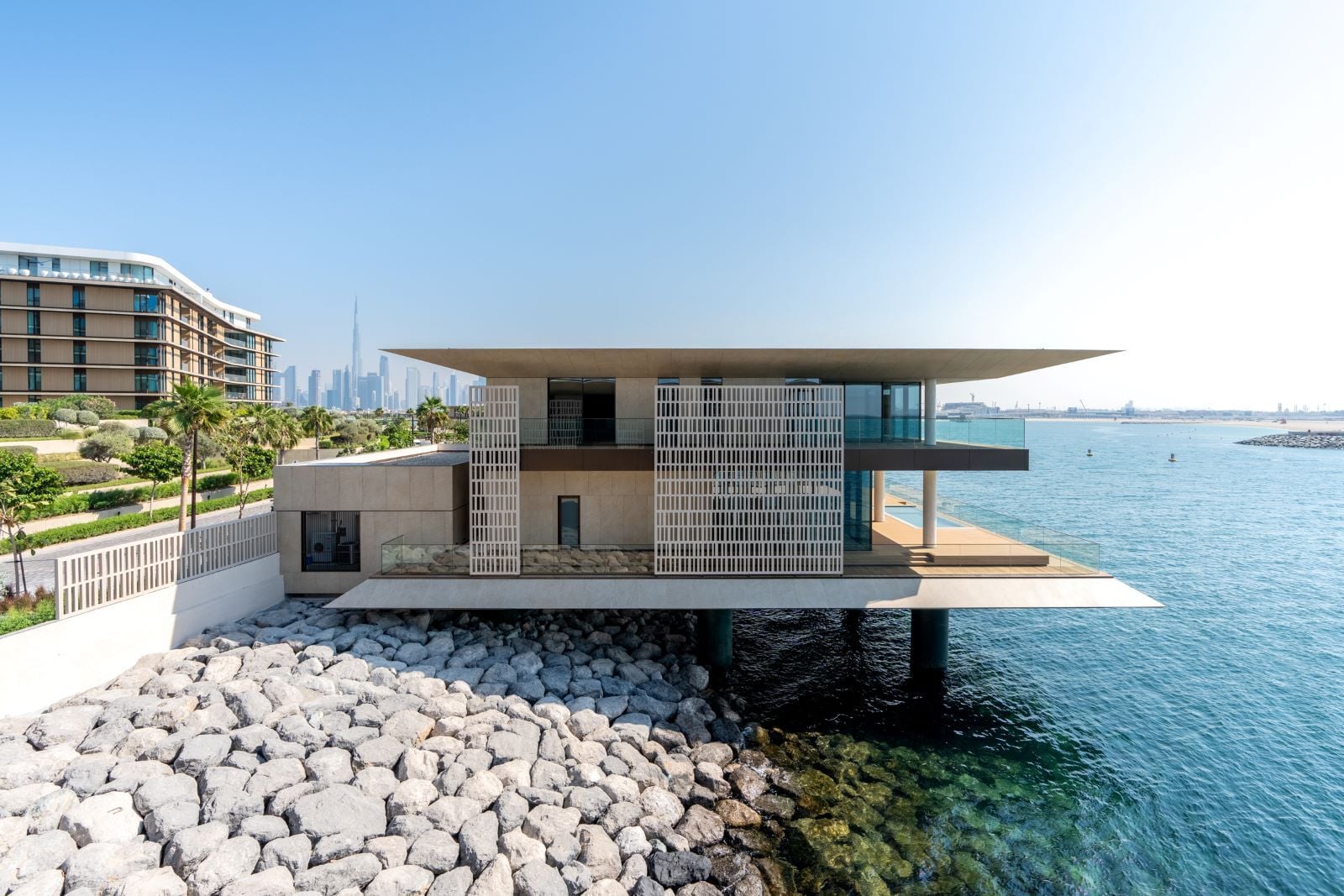
The result is a cityscape that, though it may appear organic, is in fact the collective expression of thousands of individual FAR decisions made over decades. The low-rise villa districts of Dubai's palm islands, the mid-rise residential precincts of central London, and the soaring towers of Manhattan's Midtown all reflect, in their physical form, the FAR frameworks that shaped them.
What FAR Means for Developers and Investors
For a developer, FAR is the first and most fundamental variable in any feasibility analysis. It establishes the maximum gross floor area that can be monetised, and by extension sets a ceiling on revenue potential. A plot commanding a high FAR in a strong market is a fundamentally different asset from an identically sized plot in a low-FAR zone, even if their headline land values appear comparable.
Understanding the relationship between FAR, plot size, and achievable density then becomes central to any credible assessment of land value. Experienced developers routinely model acquisitions against FAR allowances before any other analysis is conducted, because no amount of architectural ingenuity can evade the numbers encoded in the zoning ordinance.
For buyers and investors in built assets, FAR offers a different but equally important lens. A lower FAR environment typically signals more generous plot-to-building ratios, greater landscaping, fewer neighbouring units, and a more restrained sense of density. These are the conditions that tend to produce the quality of privacy, outlook, and amenity associated with premium residential living. Higher FAR environments, by contrast, deliver efficiency and urbanity at the cost of space and exclusivity.
A Foundation of Informed Decision-Making
FAR may be expressed as a simple numerical ratio, but its implications ripple across every dimension of a real estate decision, from land acquisition and project design to community character and long-term capital value. For those who approach property with the seriousness it deserves, fluency with FAR is not optional. It is foundational.